The Curiosity Curve and Compound Thinkers: Two Ideas from My Talk in Sofia
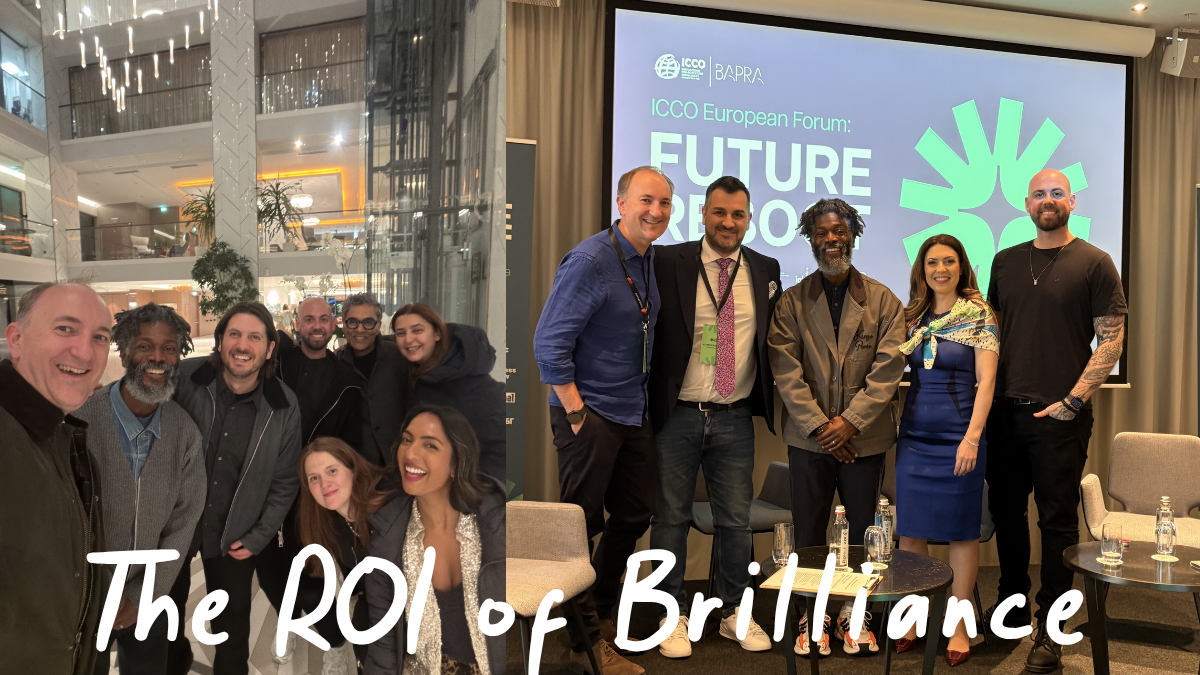
I've just come back from Sofia, Bulgaria, where I had the pleasure of speaking at the International Communications Consultancy Organisation European Forum and also at A1 Bulgaria (The country's biggest telecoms company) alongside a ridiculously talented group of international speakers.
My talk was called "The ROI of Brilliance" and covered something I've been thinking about for a long time: why most corporate training doesn't work, and what to do instead.
Two ideas seemed to really resonate, so I wanted to share them here in case they're useful.
1. The Curiosity Curve
The problem with most corporate learning is that it often feels like homework. Mandatory modules. Tick-box compliance. Death by PowerPoint. No wonder the average online course completion rate still hovers around 10%. That's not a training problem; it’s a motivation and design problem.
The behavioural economist George Loewenstein figured out why. His "information gap theory" shows that curiosity follows a predictable curve. When you know absolutely nothing about a topic, you're not curious, there's no gap in your knowledge to bother you. When you know everything, you're bored. But in the middle, when you know just enough to realise how much you don't know, curiosity peaks.
He called that initial spark a "priming dose." Give someone a small, fascinating taste of something, and their brain does the rest. The gap between what they know and what they want to know becomes an itch they have to scratch.
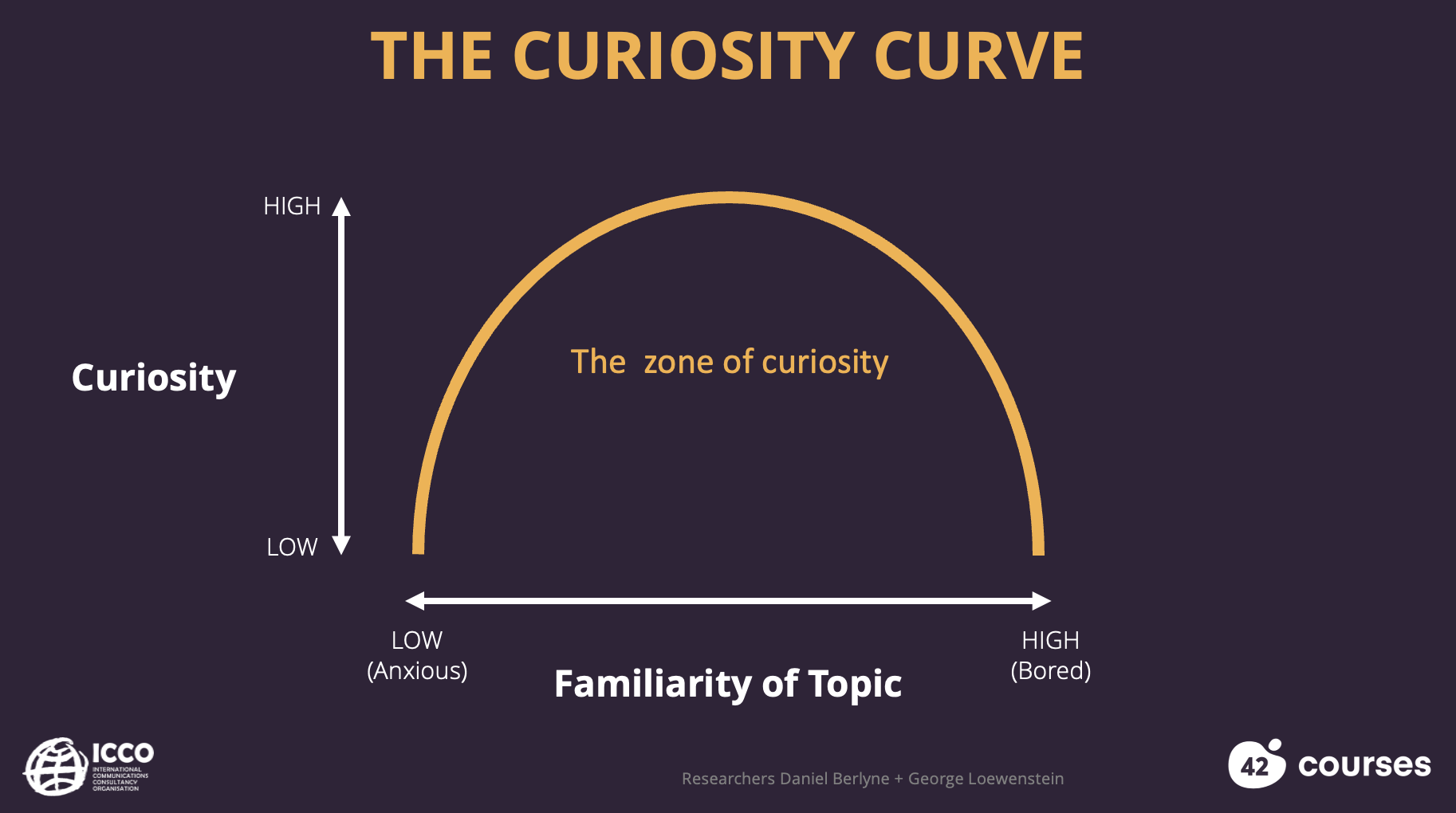
The Curiosity Curve
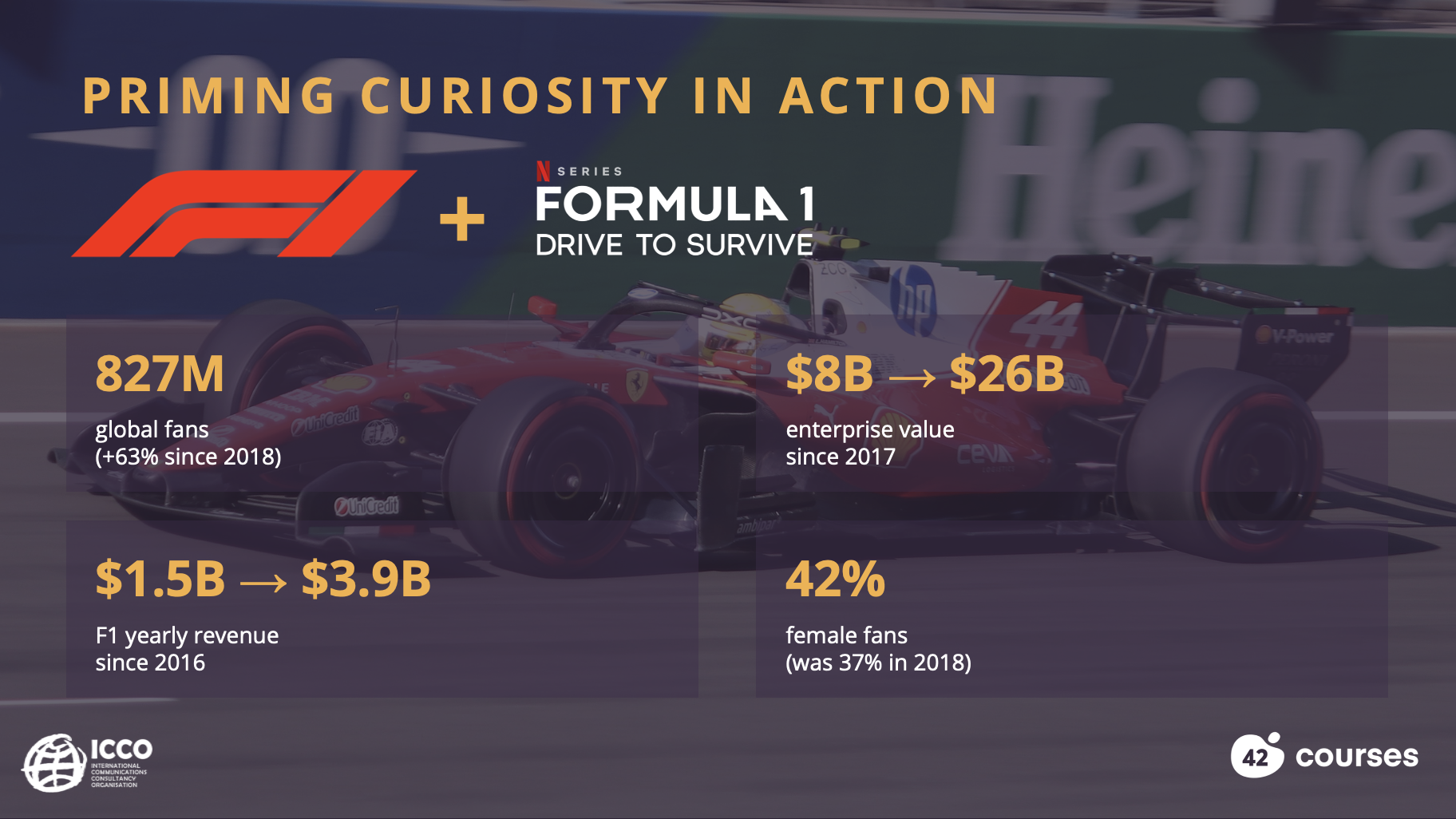
The best real-world example? Formula 1. In 2018, the sport was declining; there were 40% fewer TV viewers than a decade earlier. Then F1 and Netflix released Drive to Survive. It didn't explain tyre compounds or aerodynamic regulations. It showed characters. Rivalries. Drama. It gave people just enough to care.
The results: 827 million global fans (up 63% since 2018). Enterprise value from $8 billion to $26 billion. Race attendance up 60%. Female fanbase from 37% to 42%. Social media followers from 18.7 million to 114.5 million.
Netflix didn't teach people to love motorsport. They gave them a priming dose of curiosity and curiosity did the rest.
The takeaway for anyone responsible for learning and development: your job isn't to cram knowledge into people's heads. It's to create the conditions where curiosity thrives. Give people a fascinating entry point, a story, a problem, a question that nags at them, and then get out of the way. Most organisations don't need to teach curiosity. They need to stop accidentally killing it.
Back in the day at Ogilvy, one of the ways we did this was through "How To Friday" talk, short talks on a Friday morning from people who more often than not had nothing to do with advertising. For example, a graffiti artist, a brain surgeon, and an Olympic hockey coach came and shared their world for 30 minutes. The point was never to learn surgery. It was to broaden the creative inputs of them and the agency. To show people that interesting ideas exist everywhere. To prime curiosity.
2. Compound Thinking
The second idea builds on the first. When you create the right conditions for curiosity, people start exploring. They don't just learn one thing, they learn across multiple areas. And here's what's interesting: each new area of knowledge doesn't just add to what they know. It multiplies it.
Think of someone who understands storytelling AND behavioural science AND strategy AND design. They're not four times as useful as a specialist, they're forty times as useful. Because they see connections nobody else sees. They ask questions nobody else thinks to ask. They bring unexpected angles to every problem.
I call these people Compound Thinkers.
Like compound interest, the early deposits look small. Learning a bit of behavioural science doesn't seem transformative on day one. But over time, as it connects with everything else you know, the returns become extraordinary.
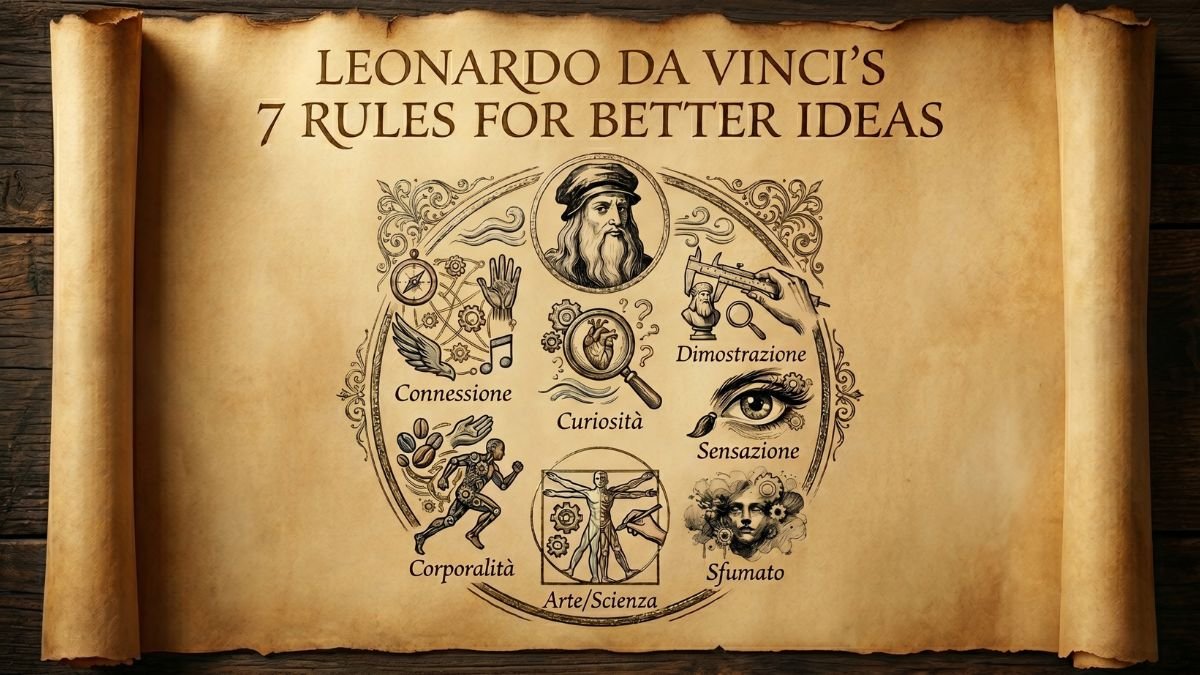
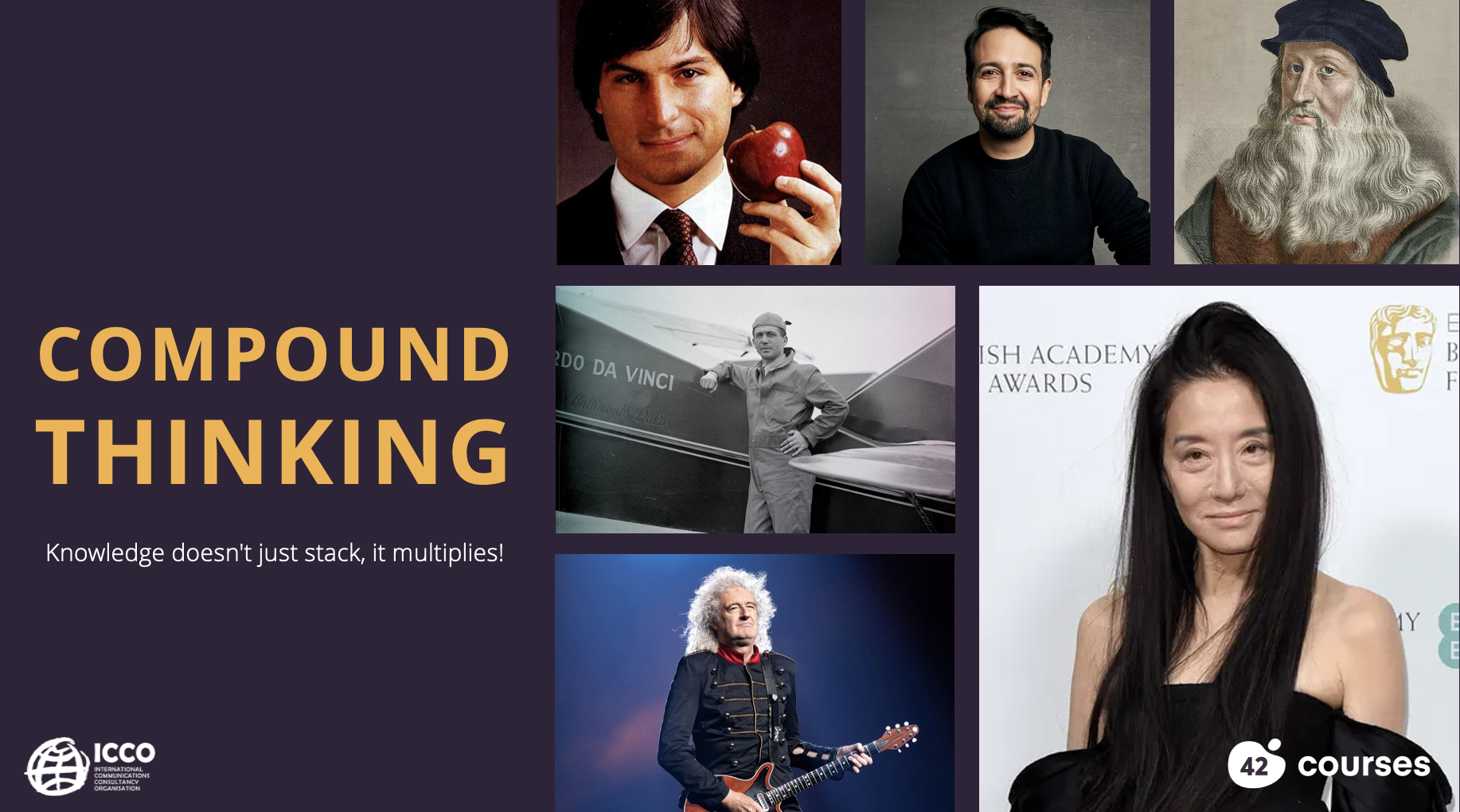
Steve Jobs was a compound thinker… technology, calligraphy, Zen Buddhism, and industrial design = Apple Leonardo da Vinci was the ultimate compound thinker… fine art, human anatomy, fluid dynamics, and mechanical engineering = Helicopters, tanks, The Mona Lisa and more. And even Lin-Manuel Miranda combined hip-hop, American history, musical theatre, and writing to create Hamilton.
These aren't just geniuses. They're people whose curiosity led them into multiple domains, and whose knowledge compounded. (p.s. Free course voucher to anyone who can name all of the people below…mail me at chris at 42courses.com)
The practical lesson is this. In a world where AI handles more and more of the execution, the human advantage is the breadth and depth of your thinking. The skills that compound: strategy, storytelling, emotional intelligence, critical thinking, behavioural science, creative craft, are the ones that make every AI tool more powerful and every team more adaptable.
AI fundamentals matter too, of course. But the half-life of a specific AI skill is about two and a half years. The half-life of great thinking is a lifetime.
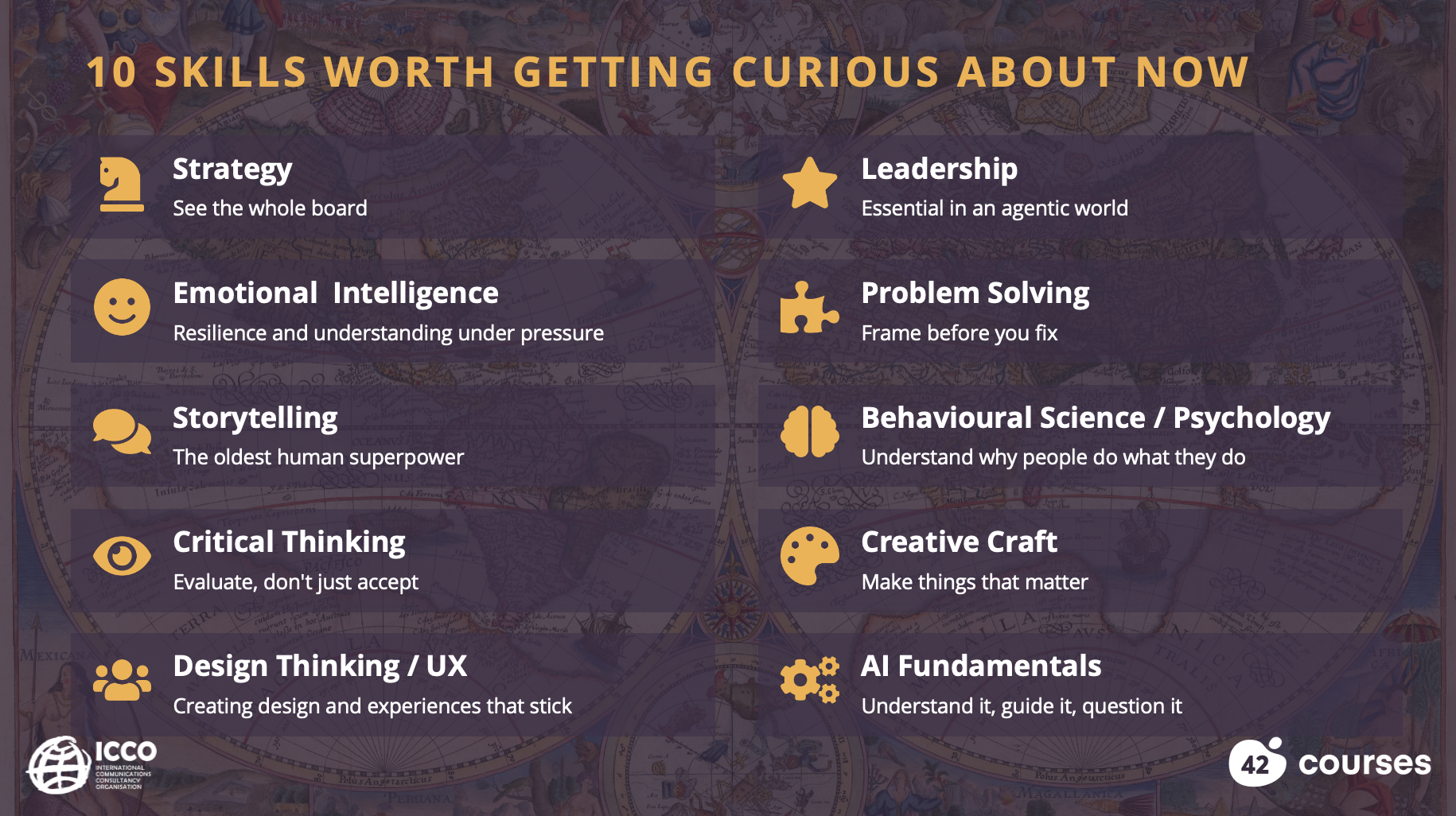
10 Skills To Learn To Future Proof Yourself
When I first arrived to work at Ogilvy all those years ago, the ECD Chris Gotz said something that has stuck with me ever since: "The people with the best people win."
He wasn't talking about hiring the most expensive talent. He was talking about building the best thinkers. Curious, adaptable, cross-pollinating compound thinkers who make everyone around them better.
That's still the most important competitive advantage any company has. The tools will change. The people who know how to think, create, and adapt, they're the asset that never depreciates.
Or to put it another way: the compound interest of curiosity is the most undervalued asset in business. And unlike AI tools, it never goes obsolete.
A massive thank you to Samuil Petkov, Alexander Dimitrov, and the A1 Bulgaria team for being such brilliant hosts. Sofia was a revelation, the food, the rakia, the rose oil and some excellent local red wine too! It’s a city that's clearly going places. I was also lucky enough to share the stage with a remarkable group of speakers at the CommPass event: Taj Reid (Burson), Atiya Zaidi (BBDO Pakistan), Bernado Gonzalez (Amazon), Iliya Valchanov (Juma), Martha Rzeppa (TBWA Germany), and Harjot Singh (McCann). The kind of people who make you realise how much you still have to learn, which, as you now know, is the best possible starting point for curiosity.