15 Interesting Things We've Learned In 2025
As 2025 draws to a close (that went quickly, didn’t it?!), it’s time for our annual rundown of interesting things we learned this year.
We’ve got a mixed bag of stuff as usual, and hopefully, plenty of it is new to you.
So without further ado, let’s review the 15 interesting things we’ve collected this year.
Plenty of random conversation topics to enlighten (or bore) others over the holiday period…
With the rise of AI slop and bots, social feeds are now chock full of low-quality, rage-bait content. It’s becoming harder to find genuine human content, as well as the weird, niche sites that characterised the early web. Now that bots drive more than half of internet traffic, many people are mourning the death of the OG net.
Disguised as a tropical island, a Dutch Naval ship, HNLMS Abraham Crijnssen, escaped from the Japanese after fierce fighting in the Dutch East Indies during WW2. Incredibly, it managed to reach the safety of Australia. How? By hugging the coastline, the ship stayed camouflaged as it island-hopped at night, evading detection.
Rory Sutherland coined the term ‘The Doorman Fallacy’ to describe situations in which businesses cut functions without understanding the intangible value they deliver. The example he gives is a luxury hotel that employs doormen to open and close the doors. When the hotel hires a management consultant to identify efficiencies, the consultant recommends replacing the doormen with automatic doors. The immediate benefit is reduced cost from not paying salaries. However, things don’t look so good as time goes on. The reason? The doormen did much more than just open doors. They greeted guests, kept undesirables away from the front, called taxis and added a touch of class, etc.
4. Insects Taste Better Than You Think
Who would have thought that cockroaches taste like mushrooms, mealybugs taste like fried potatoes, and the stinkbug tastes like an apple? Insect powder pancakes, anyone?
The region beta paradox is a way of saying: things that are ‘uncomfortable’ can do more damage in the long run than ‘terrible’ things because the terrible things are so intolerable, you are forced to make a change. It’s why the job you dislike can damage your happiness more over time than the awful one you escape. It’s the same thing with relationships. The toxic one with constant fights, you eventually leave, but the one that’s ok, you might stay for years, feeling unsatisfied.
You’re more likely to buy something if it’s expressed in smaller denominations over an extended period of time than as a larger one-off payment. For example, a charity donation of £365 a year sounds steep. But framed as just ‘£1 a day,’ it feels negligible.
7. Secret Train Station Apartments
Two former employees of Caltrain, the California state railway, built apartments above the stations where they worked, saving themselves thousands of dollars in rent and reducing their daily commute to under a minute. They got away with it for several years before being caught and given the sack!
Eigenvector centrality is a measure of importance in a network. Being connected to well-connected nodes makes you more ‘central’ than just having many random connections. For example, if Ben has 10 LinkedIn connections, but most of them don’t have many valuable connections themselves, his eigenvector centrality score will be lower than Rob’s, who has 3 connections, all of whom are CEOs.
9. The Romans Invented the Swiss Army Knife
The Romans designed their own foldable ‘Swiss Army knives’ comprising a spoon, knife, fork, toothpick, a spike to scrape meat from seashells, and a spatula. Not available at the airport, sadly.
The US President has his own branded M&Ms. JFK started the tradition of handing out cigarettes bearing the presidential seal and the sitting president’s signature to guests and journalists, particularly on Air Force One. However, when Nancy Reagan banned smoking on Air Force One in 1988, M&M’s became the official White House confectionery, producing special packs of red, white and blue M&Ms. The boxes are the size of a cigarette pack and feature the Presidential Seal and the sitting president’s signature.
11. The Saturnalia Festival of Ancient Rome
More Roman innovation. The Saturnalia was an eight-day festival where the usual rules of society were flipped. Servants swapped roles with their masters, men dressed as women and women as men. Quite extraordinary.
12. Spite House
The ultimate way to upset your neighbour? The spite house is a structure deliberately built to annoy those living next to you. A famous example is the “Skinny House” in Boston, built by a soldier to block his brother’s view after the brother built a massive house on their shared land while he was away at war. It’s revenge in bricks and mortar.
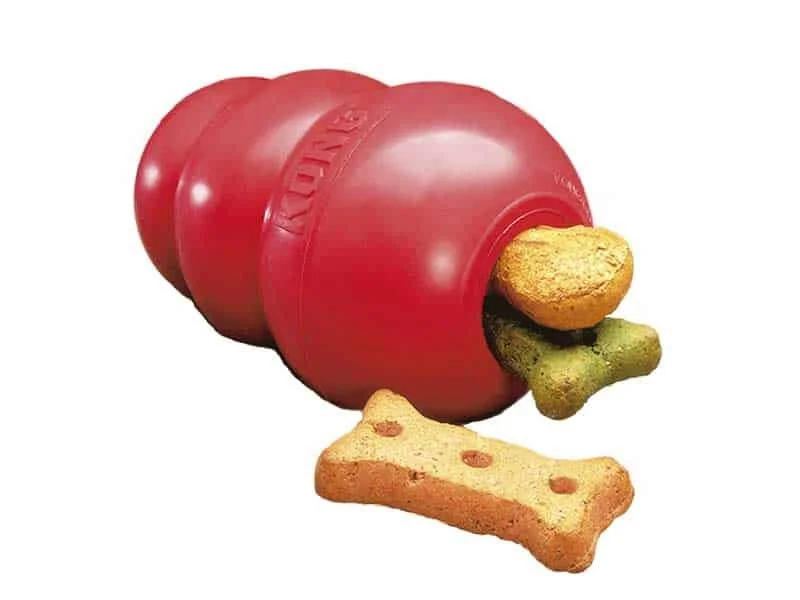
13. The Accidental Invention of the Kong Dog Toy
A fascinating backstory on the origin of one of the most popular dog toys in the world. It involves a car mechanic, an incessant-chewing German Shepherd, and a late-60s VW Type 2 camper van.
In the 1990s, the Swedish flatpack furniture maker announced a colourful new range of inflatable furniture. It sounded good on paper. Easily transported, simple to blow up and comfortable to sit on. Fans flocked to stores hoping to pick up a sofa or chair. Things were good for a while. But then the problems started. Much like a balloon, air slowly began to escape. They also attracted so much dust due to static electricity, making them look presently dirty. Oops.
Also known as the Seneca Cliff, it describes the universal rule that growth is slow but ruin is rapid. Roughly 2,000 years ago, the Roman philosopher Seneca observed how cities grew and were destroyed, and remarked: “Increases are of sluggish growth, but the way to ruin is rapid.” For example, it takes years to build trust with a business partner, but if you lie to them just once, that trust can disappear in a second.